The Definitive Guide to a Raja Ampat Tour Package: October to April
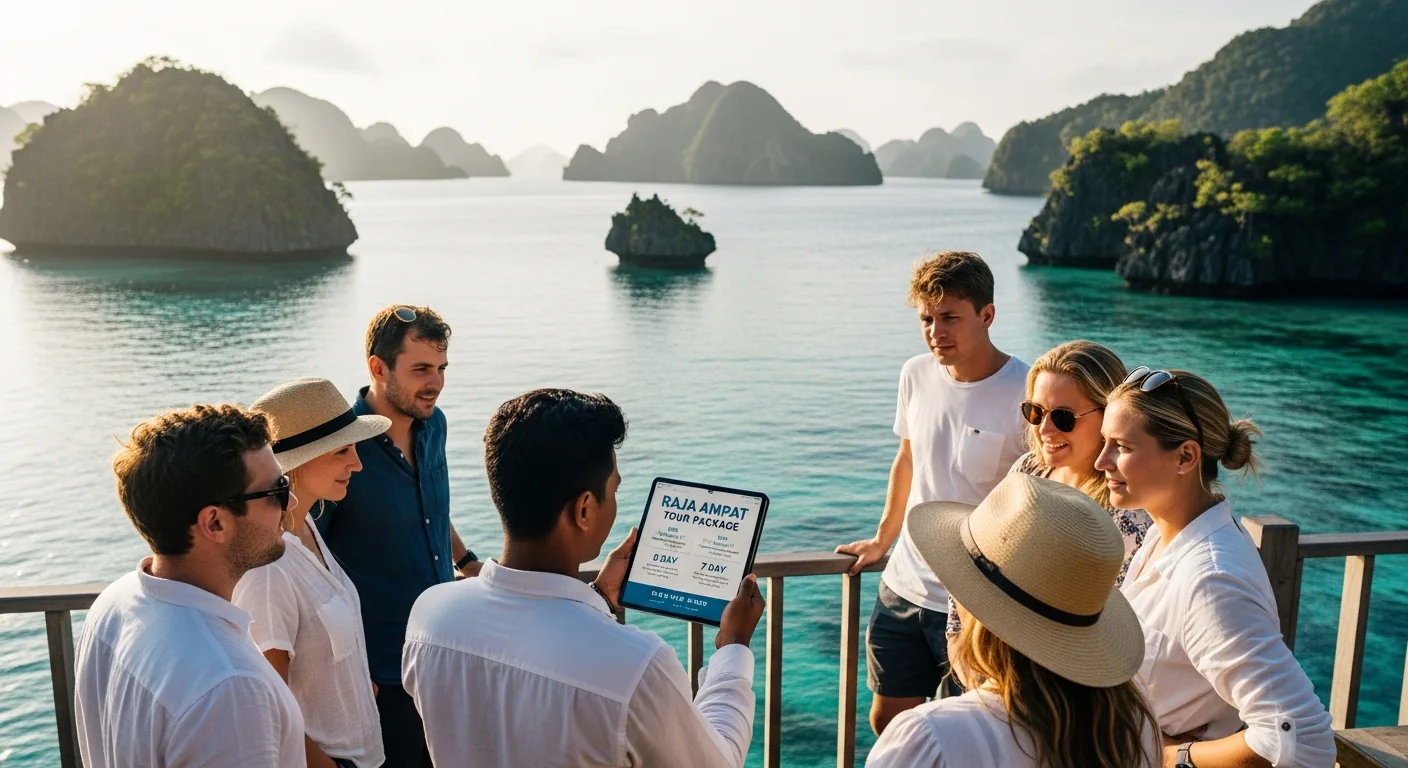
The speedboat cuts a clean line through water the color of polished jade. It is 8:00 AM, and the air, already warm, carries the scent of salt and damp earth. Below the surface at Cape Kri, a wall of fusiliers, thousands strong, moves as one organism, parting and reforming around the coral bommies. This is the sensory immersion that defines Indonesia’s West Papua province. The challenge for the discerning traveler is not in finding beauty here, but in navigating the logistics of this 40,000-square-kilometer marine sanctuary. Planning a comprehensive Raja Ampat tour package requires precise timing and expert local knowledge, especially when your objectives include the remote karst spires of Wayag and the vibrant reefs that support 76% of the world’s known coral species.
The primary consideration is the weather. The Indonesian archipelago is governed by monsoons, and a trip planned for the wrong month can result in turbulent seas and compromised underwater visibility. This guide focuses on the optimal travel window—the dry season from October to April—and provides a framework for structuring a multi-day tour that delivers access to the archipelago’s most significant sites without the operational uncertainties of the low season. See also: Contact pricing.
Decoding the Dry Season: Why October to April is the Prime Window for Raja Ampat
The distinction between Raja Ampat’s dry and wet seasons is critical for trip planning. While the region experiences a tropical climate year-round, the period from October through April offers the most favorable conditions for exploration. This is primarily due to a shift in wind patterns, which results in calmer sea surfaces. For a Raja Ampat tour package centered on speedboat day trips, placid water is not a luxury; it is a necessity. The journey to the iconic Wayag islands, for instance, is a 3- to 4-hour speedboat transit from Waisai, the regional capital on Waigeo island. In the wet season (typically May to September), strong winds and higher swells can make this passage uncomfortable or, in some cases, impossible.
During these prime months, underwater visibility frequently extends to 20-30 meters, a crucial factor for both divers and snorkelers. The reduced rainfall and surface runoff mean less sediment in the water, revealing the intricate details of the reefs. Water temperatures remain constant, averaging a pleasant 28-30°C (82-86°F), allowing for extended periods in the water without significant thermal discomfort. Furthermore, this season aligns with heightened marine life activity. For example, the cleaning station at Manta Sandy sees a significant congregation of oceanic manta rays (Manta birostris) from November through March, offering highly reliable encounters. Choosing an expertly curated raja ampat tour during this window transforms the experience from a gamble on the weather to a calculated investment in exceptional marine encounters.
Structuring Your Itinerary: A 5-Day Raja Ampat Tour Package Blueprint
A well-structured itinerary is the backbone of any successful expedition into this sprawling archipelago of over 1,500 islands. A 5-day package offers a condensed yet profound immersion. The logistical flow is key, beginning at the gateway city of Sorong (SOQ) and moving methodically through the Dampier Strait and beyond. This sample raja ampat 5 day package is designed for efficiency and impact, utilizing a private speedboat for maximum flexibility.
- Day 1: Arrival and Transfer to the Heart of the Islands. Arrive at Sorong’s Domine Eduard Osok Airport (SOQ). You will be met and transferred to the Sorong ferry terminal for the scheduled 2-hour public ferry to Waisai, the administrative center of the Raja Ampat Regency. Upon arrival in Waisai, you will board your private speedboat and transfer to your accommodation, typically a homestay or resort on Kri or a neighboring island.
- Day 2: Piaynemo’s Karst Landscape and Arborek Village. Journey to the Piaynemo island group. A climb of approximately 320 steps leads to a viewpoint offering a panoramic survey of the turquoise water and limestone islets. In the afternoon, visit Arborek Village, a community of around 190 people known for its local handicrafts and a jetty where dense schools of fish congregate.
- Day 3: The Wayag Expedition. An early start for the full-day excursion to the northern region of Wayag. This is the longest boat journey of the trip, but the reward is access to Raja Ampat’s most celebrated topography. A challenging but short climb up Mount Pindito reveals the classic aerial-like perspective of the lagoon. Lunch is served on a secluded beach.
- Day 4: The World’s Richest Reefs at Cape Kri. Focus on the Dampier Strait, the epicenter of marine biodiversity. Snorkel or dive at Cape Kri, where Dr. Gerald R. Allen famously recorded 374 fish species on a single dive. Other potential sites include Sardine Reef and Manta Sandy (seasonal), depending on conditions and guest interests.
- Day 5: Departure. One final morning snorkel before the speedboat transfer back to Waisai to catch the ferry to Sorong, connecting with your onward flight. This structured raja ampat trip package ensures you experience the region’s three core pillars: dramatic landscapes, rich biodiversity, and local culture.
Logistics and Investment: Budgeting for Your Raja Ampat Trip Package
Understanding the cost structure of a Raja Ampat expedition is essential. This is not a budget destination; the expense is a direct reflection of the remote location, the cost of fuel, and the need for specialized logistics. A private Raja Ampat tour package offers significant value by consolidating these variable costs into a predictable price. Let’s break down the primary financial components.
The first fixed cost for any visitor is the Marine Park Entry Permit, known as the PIN. For international visitors, this costs IDR 1,000,000 (approximately $65-70 USD) and is valid for 12 months. This fee directly funds conservation and community development projects within the Raja Ampat Marine Park. The largest operational expense is the private speedboat. Chartering a capable vessel with a licensed captain and crew can range from $800 to $1,500 USD per day, depending on the boat’s size, engine power, and fuel consumption. This cost is why all-inclusive packages are the most practical approach. A typical mid-range, 5-day private tour package based out of a comfortable homestay or eco-resort, including boat, guide, meals, and accommodation, will generally start from $2,500 USD per person (based on double occupancy). This price can increase with higher-end resort selections or more complex, customized itineraries.
Sample Package Comparison
| Package Tier | Accommodation Style | Estimated Price (Per Person, 5 Days) | Inclusions |
|---|---|---|---|
| Homestay-Based Package | Local family-run, basic amenities | $2,500 – $3,500 USD | Private speedboat, guide, all meals, accommodation, transfers |
| Eco-Resort Package | Overwater bungalows, enhanced comfort | $3,800 – $5,500 USD | Private speedboat, specialist guide, all meals, resort accommodation, transfers |
| Private Liveaboard Charter | Dedicated vessel, full crew | $6,000+ USD | Exclusive use of boat, full crew including chef, divemaster, all meals, dive equipment |
By opting for a comprehensive raja ampat package, you eliminate the uncertainty of securing reliable transport and services in a region with limited infrastructure, allowing you to focus entirely on the experience.
Beneath the Surface: A Marine Biologist’s Perspective on Key Snorkel Sites
While the landscapes are dramatic, the global significance of Raja Ampat lies in its marine biodiversity. The archipelago is the heart of the Coral Triangle, an area that holds the highest concentration of marine species on Earth. A quality Raja Ampat tour package must include dedicated time at sites that showcase this richness. Dr. Arnaz Mehta, a marine biologist with extensive research experience in the region, notes, “Raja Ampat is a functioning ‘species factory.’ The confluence of the Indian and Pacific Oceans creates nutrient-rich currents that fuel an explosion of life, from pygmy seahorses to whale sharks.”
Cape Kri is a mandatory stop. This submerged reef at the eastern tip of Kri island is a testament to this biomass. The sheer density of fish—barracuda, jacks, batfish, and Napoleon wrasse—can be disorienting for first-time visitors. The reef slope is covered in pristine hard and soft corals, providing a habitat for the smaller, cryptic creatures that fascinate underwater photographers. Another essential site is Manta Sandy, a shallow channel between islands that serves as a cleaning station for giant oceanic manta rays. Here, snorkelers can often observe from a respectful distance as these animals, with wingspans up to 5 meters, hover over coral heads while cleaner wrasse remove parasites from their bodies. A well-planned raja ampat tour will time visits to these sites according to tides and currents to ensure the best possible conditions for observation. The health of these ecosystems is palpable and serves as a powerful reminder of what a protected marine environment can sustain.
Choosing Your Base: Speedboat Day Trips vs. Liveaboard Charters
A fundamental decision when planning your Raja Ampat tour is the style of accommodation and exploration: a land-based stay with daily speedboat excursions or a dedicated liveaboard vessel. Each offers a distinct experience with specific advantages. The land-based option, typically at a resort or homestay on islands like Kri, Gam, or Arborek, provides a connection to a specific location. You have more space, stable ground, and the opportunity to interact with the local community. Daily speedboat trips are then organized to explore surrounding sites. This model is well-suited for families, travelers who prefer not to be on a boat 24/7, and those who wish to combine underwater activities with relaxation at a single base.
Conversely, a liveaboard is a floating hotel that moves between locations, often overnight. This is the most efficient way to cover the vast distances within Raja Ampat and reach the most remote dive and snorkel sites, particularly in the far north (Wayag) or south (Misool). A liveaboard maximizes time in the water, often offering three to four dives or snorkels per day. It is the preferred choice for dedicated divers and photographers who want to access the widest possible range of environments. The primary trade-off is the confined space and the continuous motion of the vessel. A high-quality Raja Ampat tour package can be built around either model, and the correct choice depends entirely on your travel priorities, group composition, and comfort level with sea travel.
Your Next Steps: Securing Your Raja Ampat Tour
The information and logistics involved in arranging a seamless trip to West Papua can be substantial. The value of a specialized operator lies in their ability to manage these complexities on your behalf, ensuring that your time is spent engaging with the destination, not wrestling with its logistics. From securing the correct ferry tickets to chartering a reliable speedboat with a skilled crew and navigating the changing fuel prices, a professional service is indispensable. A premier Raja Ampat tour package is a synthesis of local expertise and a deep understanding of the discerning traveler’s expectations.
To begin the process of creating your tailored Raja Ampat itinerary, we recommend the following actions:
- Confirm Your Travel Window: Solidify your preferred dates between October and April to take advantage of the optimal weather and sea conditions.
- Define Your Interests: Are you a dedicated photographer, a family seeking a blend of activity and relaxation, or an avid snorkeler focused on marine life? Communicating your priorities allows our specialists to craft a more precise itinerary.
- Consult with an Expert: Contact our team to discuss the various package options, accommodation styles, and specific sites you wish to experience. We can provide current information on conditions and availability.
Let us handle the intricate planning. We invite you to reach out to our travel specialists to start designing your expedition. See also: 3 Day Tour Package.
Brand: Raja Ampat Tour PackagePhone: +62 811-3941-4563
Email: bd@juaraholding.com
Office: Jalan Sunset Road No. 88, Kuta, Badung, Bali 80361
Related: Raja Ampat Tour Package.
Related: Raja Ampat Tour Package.